
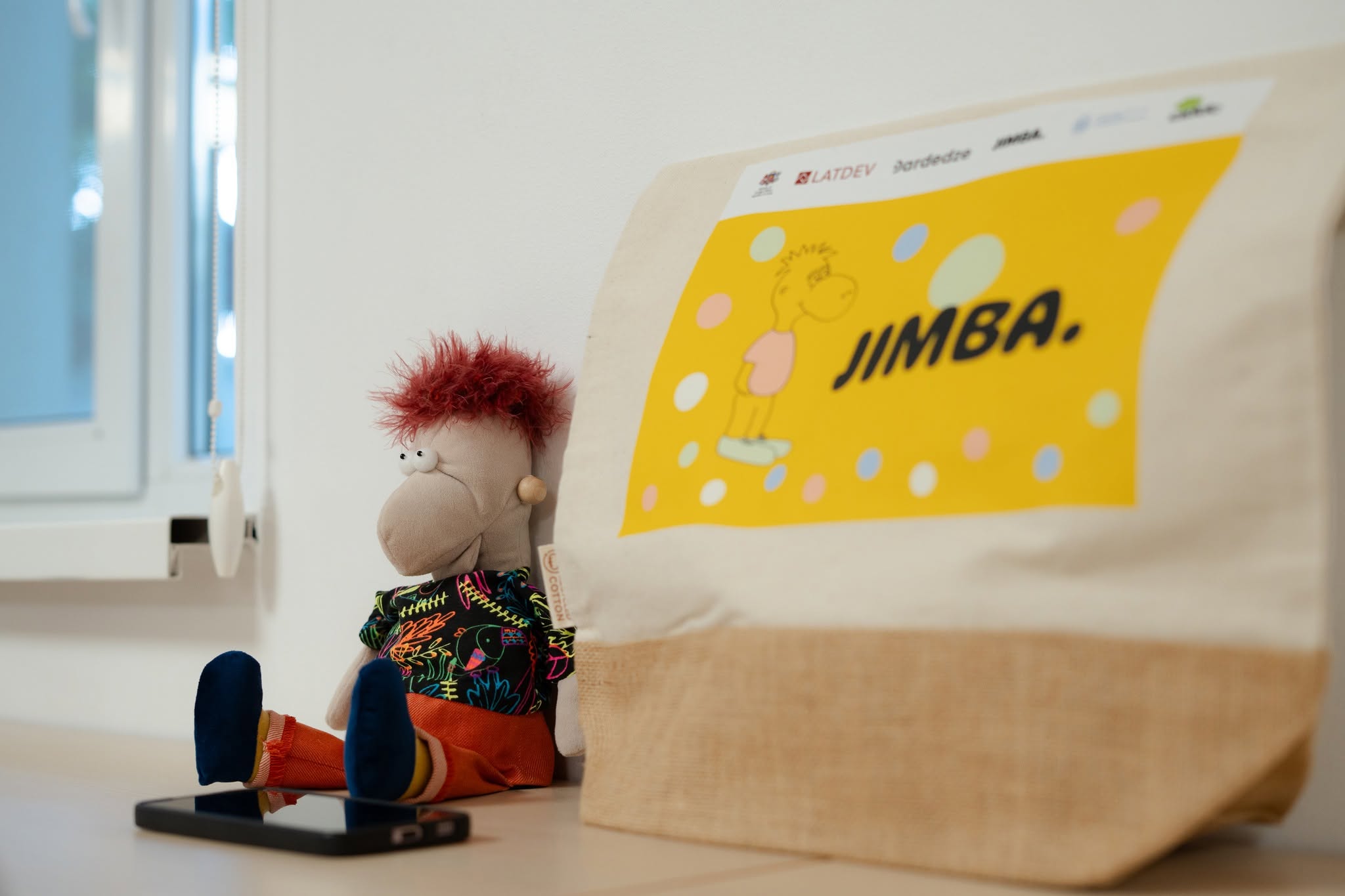
The “Jimba’s Safety Steps” program—developed in Latvia—was implemented as a pilot project across 20 preschool educational institutions in Moldova, reaching 501 children. Furthermore, following training and the practical implementation of the program, the proportion of specialists who know how to respond to suspected cases of child abuse increased from 45% to 90%.
Moldova is the first country outside of Latvia to introduce the “Jimba’s Safety Steps” program. The pilot project was carried out by the Child Rights Information and Documentation Centre (CIDDC), which drew upon Latvia’s experience while adapting the program to the local educational context. Upon the conclusion of the pilot project, the involved specialists, heads of educational institutions, representatives from the Moldovan Ministry of Education and Research, and program partners met in Chisinau to evaluate the results and discuss the potential for continuing and gradually expanding the program.
“Child protection does not begin the moment a threat has already occurred. It begins much earlier—at the prevention stage—through education, relationships built on trust, communication, and the creation of an environment where a child learns to recognize their own emotions, express their needs, respect the boundaries of others, and understand that their own boundaries must also be respected. The ‘Jimba’ program is a valuable experience, and it is important that it continues,” emphasizes Natalia Zotea, a chief consultant at the Ministry of Education and Research of Moldova.
Developed by the organization “Centrs Dardedze,” this safety program has helped specialists in 20 Moldovan preschool institutions better understand how to assist children in recognizing unsafe situations, becoming aware of their personal boundaries, and knowing which adult to turn to for help. The implementation of the program included training sessions, consultations, visits to educational institutions, and an exchange of experience between kindergartens in Moldova and their counterparts in Latvia.
An evaluation of the pilot project confirms that the program is suitable for implementation in Moldovan preschool educational institutions. Following the training and the practical implementation of the program, the proportion of “Jimba agents” who know how to respond in cases of suspected child abuse increased from 45% to 90%; furthermore, all the agents expressed confidence in their ability to continue educating children.
“For us, the pilot project meant more than just adopting and implementing a program that has been successful in Latvia within the context of Moldova. We wanted to understand it, see how it functions in our specific environment, and, most importantly, work alongside the specialists throughout the entire process. We witnessed the dedication, empathy, and sense of responsibility with which the Jimba agents worked with both children and parents. The fact that some of them are already continuing the program with new groups of children is one of the most rewarding outcomes of this pilot project,” notes Arina Zîcu, Executive Director of CIDDC.
Parents have also become involved in educating their children about safety in relationships. In the evaluation of the pilot project, 73.8% of the surveyed parents indicated that they had already discussed these topics with their children at home, while 93.3% expressed confidence that these conversations would continue. Educators have also observed positive changes: following the sessions, children demonstrate a better understanding of personal boundaries, show greater respect for the bodies and personal space of others, and learn the principles of building safe relationships. These results indicate that child safety education entails not only imparting knowledge to children but also ensuring that adults are able to recognize potential harm, respond appropriately, and foster an environment in which a child feels safe to confide in others and seek help.
The evaluation findings support the continuation and gradual expansion of the program in Moldova, through the provision of professional training, consultative support, and institutional backing.
“We believe that violence against children, including sexual abuse, can be prevented if we—as adults, whether parents or professionals—take responsibility for being trusted figures in children’s lives. The ‘Jimba’ program was created to talk to children about safe relationships in a playful, age-appropriate way, allowing them to experience interpersonal connections rooted in respect and support. Latvia’s experience shows that this approach works, and we are pleased to share it with Moldova, hoping that the program will expand to create a safety net for as many children as possible,” emphasizes Agnese Sladzevska, a board member of ‘Centrs Dardedze.’
In Latvia, the ‘Jimba’ safety steps program is currently implemented in 428 preschool educational institutions across 36 municipalities—with the Saulkrasti and Jūrmala municipalities joining this year. Through 11 sessions, children learn—in an age-appropriate manner—how to recognize emotions, understand their own bodies and personal boundaries, build safe relationships, identify unsafe situations, and seek help from a trusted adult. The learning process incorporates games, stories, films, songs, and the Džimba puppet—a favorite among children.
The project “Promoting the Protection of Children’s Rights in Moldova through the Implementation of a Latvian Best Practice: The ‘Jimba Safety Steps’ Program” is carried out with financial support from the Ministry of Foreign Affairs of the Republic of Latvia.